
Kenya has selected companies to develop strategic mineral deposits in Kwale, Samburu and Tharaka Nithi counties, marking a new phase in the government’s efforts to turn its largely untapped mineral resources into commercial assets.
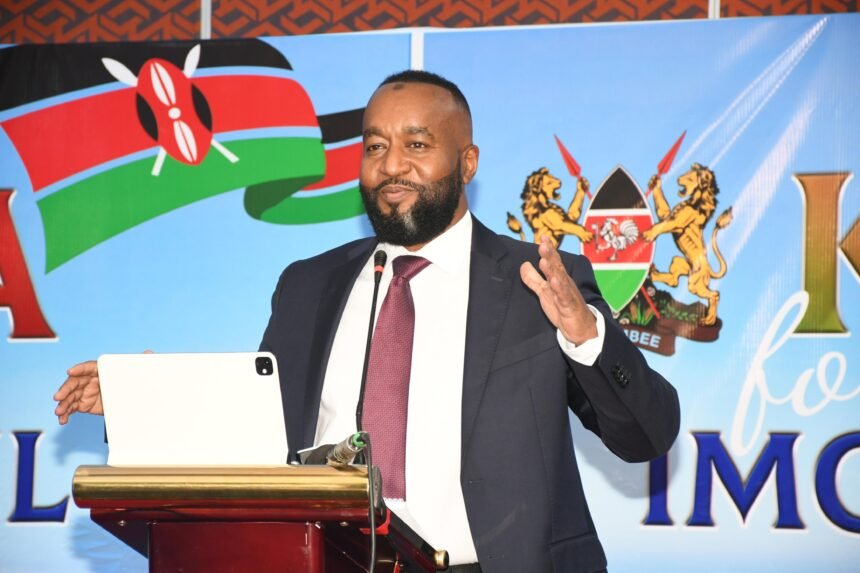
Mining, Blue Economy and Maritime Affairs Cabinet Secretary Hassan Joho announced the outcome of a competitive tendering process that has attracted local and international mining interests, with niobium, rare earth elements, chromite and copper among the targeted resources.
The Ministry has issued Notices of Intention to Award to three successful bidders following the completion of technical, financial and statutory procurement evaluations.
Frontier Minerals Consortium, comprising Frontier Minerals LLC, Bunker Hill Mining Corp, ReElement Technologies and American Resources Corporation, has been selected for the Mrima Hill Niobium, Rare Earth Elements and Other Minerals Project in Kwale County.
Meanwhile, a joint venture between China’s Fangda Special Steel Technology Co. Ltd and Sinohydro Corporation has secured the intended awards for two other projects, the Kang’ura Chromite Development Project in Samburu County and the Kamacabi Copper Development Project in Tharaka Nithi County.
The announcement brings the three projects closer to exploration and eventual commercial development, although the selected companies must still meet community engagement and licensing requirements before prospecting can begin.
Government tightens conditions for mining investment
One of the major issues addressed in the tendering process is the government’s attempt to avoid awarding mineral rights to companies that lack the technical expertise or financial resources to develop large-scale mining projects.
Joho said the Ministry wanted to attract companies capable of supporting local industrial development rather than simply extracting minerals for export.
“Our commitment from the outset was to ensure that Kenya attracts only world-class, technically capable, and financially sound partners who share our vision for in-country value addition, environmental stewardship, and shared prosperity,” he said.
The government conducted the procurement under the Mining Act, the Mining (Award of Mineral Rights by Tender) Regulations, 2017, and the Public Procurement and Asset Disposal Act, 2015.
The process began in March 2026, when the Ministry published an open Request for Expression of Interest in the Kenya Gazette, The East African, MyGov and the State Department for Mining website.
Shortlisted companies received detailed Requests for Proposals in July, followed by a mandatory pre-bid conference in August. The Ministry subsequently opened the bids on October 21.
Bidders underwent a three-stage evaluation covering legal compliance, technical capacity and financial strength.
The technical assessment examined geological and exploration expertise, mineral processing and beneficiation plans, local employment commitments, environmental restoration, biodiversity management and protection of cultural heritage.
Importantly, companies were required to achieve a minimum technical score of 80% before proceeding through the evaluation process.
The financial assessment then considered audited financial capacity, funded exploration investment plans and financial commitments to the State.
Local processing and environmental protection take centre stage
The government is placing emphasis on how the projects will contribute to Kenya’s industrial development.
The inclusion of mineral processing and beneficiation plans in the technical evaluation signals an effort to retain more economic value within the country instead of relying entirely on the export of unprocessed mineral resources.
This is particularly relevant for minerals such as niobium and rare earth elements, which are important inputs in specialised manufacturing and advanced industrial applications.
The government has also made environmental protection a central requirement of the proposed developments.
Successful bidders were evaluated on their plans for environmental restoration, biodiversity management and the protection of cultural heritage. These requirements are particularly significant for projects located in areas where mining activities could affect local ecosystems, land use and existing livelihoods.
The Ministry has also placed community participation among the conditions that must be satisfied before exploration begins.
Community consent becomes a condition for prospecting
Joho said the government deliberately prioritised identifying technically and financially qualified companies before initiating formal community engagement.
This approach is intended to give residents a clearer understanding of the companies seeking to operate in their areas, including their previous experience, financial capacity and ability to honour environmental and social commitments.
“Host communities deserve to know exactly who is coming to their locality, what their technical track record looks like, and whether they possess the real financial muscle to honour commitments on environmental safety, cultural heritage, local jobs, and community development,” Joho said.
Under the next phase, the successful bidders must engage host communities, landowners, county governments and other relevant stakeholders and obtain the necessary statutory consents.
The companies must also apply for prospecting licences through the Ministry’s Online Mining Cadastre (OMC) portal, submit the required documentation and pay the prescribed fees.
Their applications will subsequently undergo independent scrutiny by the Mineral Rights Board before recommendations are made to the Cabinet Secretary.
Joho was clear that selection through the competitive tendering process does not automatically grant companies permission to commence exploration.
“An award at the end of a tender process is not a licence to immediately break ground; rather, it is the gateway to meaningful local partnership and strict regulatory compliance,” he stated.
He further emphasised that “No prospecting operation can proceed without the social licence and formal consents of the people on the ground.”
Two mineral projects fail to attract qualifying bids
While three projects have progressed to the intended award stage, the tendering process did not produce responsive qualifying bids for the Lali Hills Manganese Project in Tana River County and the Kiritiri Coltan Project in Embu County.
The Ministry said the two projects would be addressed separately in accordance with the law.