

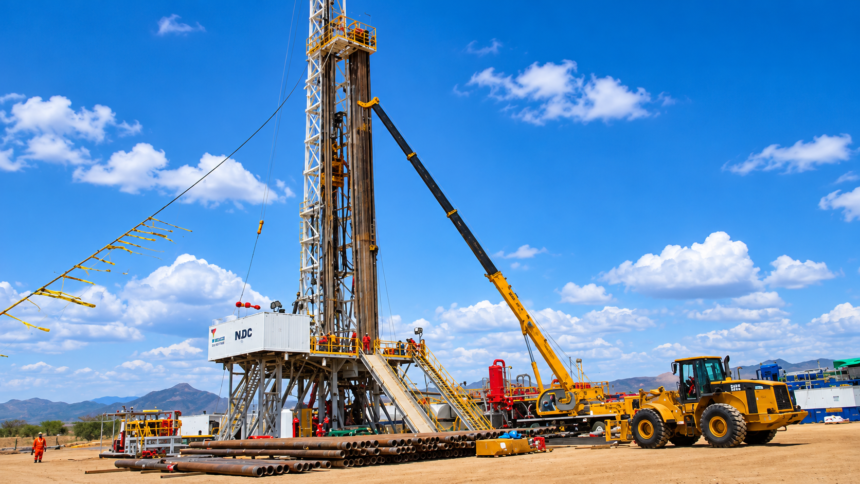
Kenya began drilling its first production well at the Amosing field in Turkana County’s South Lokichar basin on Friday, keeping the government’s December 1, 2026 date for first oil.
Gulf Energy E&P, which operates Blocks T6 and T7 under production sharing contracts with the national government, is using a GW70 onshore rig leased from China’s Great Wall Drilling Company.
Spudding is the moment a drill bit first breaks ground on a new well, and it marks the start of field operations.
The company is targeting 20,000 barrels a day in the first phase, rising to 50,000 barrels a day in a second phase, on a project valued at KSh774 billion ($6 billion).
The government projects lifetime earnings of more than KSh371 billion ($2.9 billion), depending on oil prices and volumes.
First-phase crude, a medium, sweet grade priced against Dated Brent, will be trucked to Mombasa and stored at the Kenya Petroleum Refineries tank farm.
For scale, the Kenya National Bureau of Statistics recorded imports of 5.5 million tonnes of petroleum products in 2025, up 12.2% on the year.
Economic Benefits
Oil-exporting countries earn substantial foreign exchange from selling crude to international markets.
For example, Nigeria earned $31.54 billion from crude oil exports in 2025, according to Central Bank of Nigeria Balance of Payments data cited in market reporting (down 14.4% from 2024 due to softer global prices).
These earnings are meant to increase export receipts, support foreign exchange reserves and improve the country’s capacity to finance imports.
Oil can also strengthen diplomatic and commercial relationships with major energy-consuming economies.
Nigeria, Angola and other African petroleum producers have historically relied on crude exports as important sources of foreign exchange.