

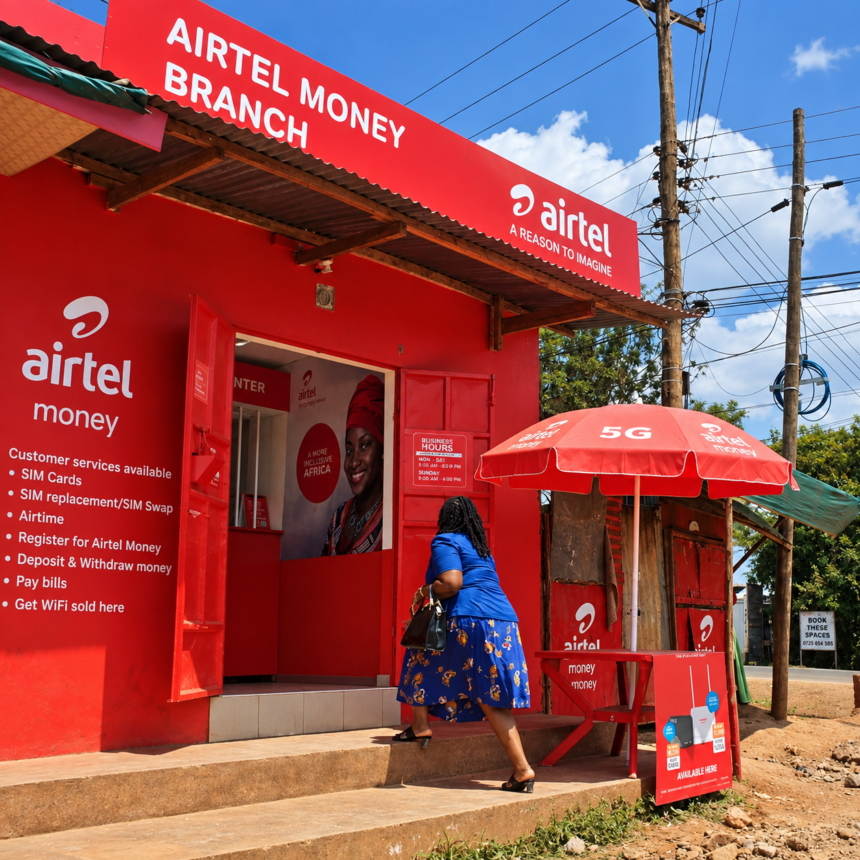
Airtel Money has set the price for its planned London Stock Exchange debut at $2.60 per share, equivalent to £1.96, valuing the African mobile payments business at an estimated $7 billion.
The listing is expected to become one of the largest London IPOs in recent years and will give investors exposure to one of Africa’s biggest mobile money platforms.
Trading is expected to begin in October, with full admission to the London Stock Exchange scheduled for October 14, 2026.
What is being sold?
The IPO will involve existing shareholders selling 270 million shares at the equivalent of $2.60 per share. That represents approximately $703 million worth of shares.
A further 27 million shares could be sold if an over-allotment option is fully exercised, potentially taking the total offer to about $773 million.
The key point is that Airtel Money itself is not raising new capital through the IPO. The shares being offered already belong to existing investors, meaning proceeds from the sale will go to those shareholders rather than into the company’s balance sheet.
Airtel Africa Shareholding?
Airtel Africa is not expected to sell shares in the main offering and plans to remain a long-term strategic shareholder in Airtel Money.
Based on current indications, around 16.5% of Airtel Money’s shares are expected to be held by the public after the listing. That could rise to approximately 17.5% if the full over-allotment option is exercised.
The International Finance Corporation (IFC) has also committed to purchase up to $90 million worth of shares as a cornerstone investor.
The $7 billion valuation is below the $8 billion to $9 billion range that had been reported earlier in the IPO process. The final pricing gives investors a clearer picture of how Airtel Money is being valued ahead of its London debut.
Airtel Money operates across 13 African countries and had about 53 million monthly customers as of June 2026, according to Airtel Africa.
The London listing will give the business an independently traded market valuation while Airtel Africa retains its strategic stake.