

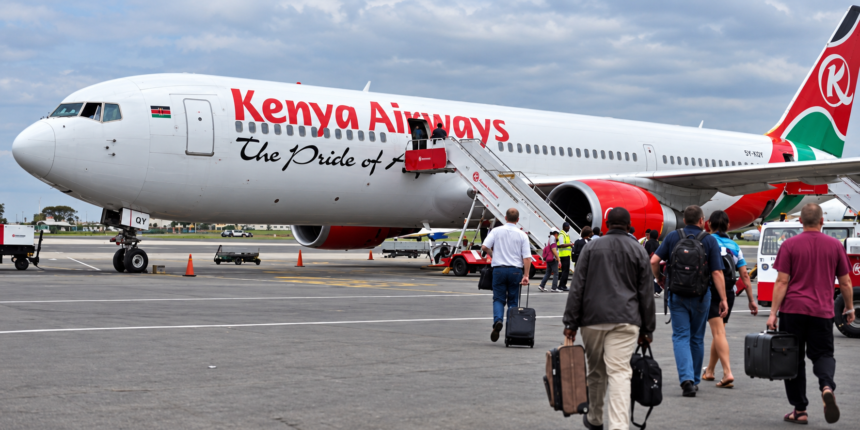
Governments are courting investors, state companies are buying each other's airlines, and African carriers are taking stakes across borders. Every deal so far keeps effective control close to home.South Africa and Kenya moved toward new ownership of their national carriers in the same week of late August. South Africa’s Cabinet approved a new search for a strategic equity partner for South African Airways, describing it as a long-term step to strengthen the airline’s balance sheet and support fleet renewal. In Nairobi, Kenya Airways’ board approved an investor memorandum that opens a formal search for a partner.
The two decisions are part of a wider shift in who pays for Africa’s airlines. Angola has set a date to sell part of TAAG. Mozambique has sold most of LAM to other state companies. Ethiopian Airlines keeps adding partner carriers across the continent. A Johannesburg investment firm is buying South Africa’s largest domestic airline, and Gulf carriers are building positions through airports and route partnerships.
There are at least five funding models in use: foreign or private strategic partners, recapitalisation through other state companies, African airlines investing in other airlines, domestic private capital, and Gulf capital through equity and airports. Whichever prevails in each market will decide who runs African aviation over the next decade.
Governments going to market
Kenya has spent close to a decade looking for a strategic partner, and the terms of the search are still changing. Mbadi said the government wants a partner that brings airline expertise and best practice as well as money. The investor field is broad: Kamal said the approaches include one investor offering a loan, one seeking equity, and one offering aircraft in exchange for shares.
The sequence has now changed. Kamal said in September the airline will first restructure its balance sheet, after which it expects to be able to attract significant new capital. Shareholders have approved additional capital support, KPMG has prepared the investment memorandum, and a transaction adviser is being appointed to engage potential investors. The state has already taken on part of the airline’s debt for later conversion into equity.
Kenya‘s limit is control. Kittony has said Kenya must not lose significant equity control of the airline, so that it keeps its national carrier status. The Treasury has told Parliament it is aiming to complete the process by December 2026. Company secretary Habil Waswani took over as acting chief executive on September 15, the second leadership change in nine months.
South Africa is trying again after its first attempt at a partial sale failed. The government announced in June 2021 that the Takatso Consortium would take 51% of SAA. That deal ended in March 2024 after the two sides could not agree on a revised structure following a new valuation. The new process begins with the airline’s governance still unsettled. The Auditor-General issued a disclaimer of opinion on SAA’s financial statements for the year to March 2025, and the acting group CEO was placed on special leave in August. The Department of Transport is running the process, and SAA has said it will not comment while it is underway.
Angola has chosen a method after years of delay. A presidential decree schedules TAAG’s privatisation for 2026 through a restricted tender, in which investors are pre-qualified on technical and financial capacity. The sale was first planned for 2021 and later reset for 2024 as a stock exchange auction. The state asset manager has said the partner should bring technology and operating know-how as well as capital, and that a stake could later be listed.
Mauritius is looking for a partner as its results improve. Air Mauritius has reported a return to profitability in the 2025–2026 financial year. Its board has held exploratory talks on a strategic partnership, with Qatar Airways reportedly among those considered. In September, Prime Minister Ramgoolam set up an aviation council to review air access and said Abu Dhabi had expressed interest in Etihad flights to Mauritius.
Senegal is keeping Air Sénégal state-funded while it restructures. The state has supported the airline with 181 billion FCFA since 2018. A committee under the Prime Minister’s office is now working through a new cash injection, a smaller network and fleet, possible strategic partnerships, and a regional subsidiary, Air Sénégal Express.
The state as its own investor
Mozambique refinanced its airline from within the public sector. The government decided in 2025 to sell most of the state’s shares in LAM to three state companies: the insurer EMOSE, the ports and railways operator CFM, and the hydropower producer Hidroeléctrica de Cahora Bassa. Transport Minister João Matlombe told Parliament the new shareholders reinforce the airline’s national character while keeping it under state control. So far, the state accounts record only part of the planned sale. LAM now operates under the Air Mozambique name.
Tunisia has ruled out a sale. President Kais Saied has repeatedly rejected privatising Tunisair, which is listed in Tunis and majority-owned by the state. The government’s focus is on returning grounded aircraft to service and completing overdue financial statements, which officials describe as necessary for the airline to borrow again.
African airlines as owners
Ethiopia runs the continent’s clearest alternative to selling to outsiders: a state-owned airline building a network of partner carriers. Ethiopian Airlines holds stakes in ASKY in Lomé, Malawi Airlines in Lilongwe, Zambia Airways in Lusaka and Air Congo in Kinshasa. The support goes beyond capital. ASKY leases its aircraft exclusively from Ethiopian. Its chief executive has said Ethiopian’s credit standing brings down what ASKY pays for them, and the two are planning a maintenance centre in Lomé. The model carries risk for Ethiopian, which has made provisions for doubtful debts owed by ASKY and Zambia Airways.
Ethiopia‘s plans for the next decade are larger still. The airline’s Vision 2035 strategy targets $25 billion in revenue and 67 million passengers a year. Most of that growth depends on Bishoftu, the new airport south of Addis Ababa: the existing Bole airport cannot absorb it, and Bishoftu’s first phase is designed for 60 million passengers a year.
Nigeria‘s private carriers are investing abroad. Air Peace took a majority stake in the Caribbean regional airline LIAT 2020, which Antigua and Barbuda Prime Minister Gaston Browne said would run strictly on commercial terms. Lagos-based Xejet owns Air Sierra Leone. That airline has operated London flights with chartered aircraft while it completes its own certification, and it plans to resume the route in October.
Kenya has also been on the buying side. Kenya Airways took 49 percent of Tanzania’s Precision Air in 2003. That stake is now valued at a fraction of the original price, and the airline said in 2025 it was reviewing the investment.
Local private money
South Africa is where domestic private capital has gone furthest. Harith, a Johannesburg-based pan-African investment firm, agreed in February to buy FlySafair. The deal moves the country’s largest domestic airline into full South African ownership after a dispute over its foreign shareholding. The Competition Commission recommended approval with conditions tied to Harith’s stake in Lanseria Airport. The Commission noted that Harith had pulled out of the SAA deal in 2024, so the investor that left the state airline is now buying its largest private domestic rival.
CemAir, a privately owned rival, has asked the Competition Tribunal to block the deal. It argues that links between Harith’s backers and the Public Investment Corporation, the state pension fund manager, create a risk of commercially sensitive information being shared. The Commission responded that the PIC would hold only a minimal indirect interest. The Tribunal has reserved its decision.
Gulf carriers: airports and route partnerships first
Rwanda shows how slowly Gulf equity deals can close. Qatar Airways agreed in December 2019 to take 60% of the new Bugesera airport and announced plans for 49% of RwandAir soon after. In June 2024, RwandAir chief executive Yvonne Makolo said the deal could close within a month. In May 2026, the two carriers were still described as on course to conclude it in the coming months. The IMF has warned that the airport’s cost will add to Rwanda’s debt service burden.
South Africa‘s ownership rules shaped Qatar’s other African investment. Qatar Airways agreed to take 25% of Airlink, subject to regulatory approval, which Airlink’s chief executive said is the most a foreign company can own in a South African airline.
Zimbabwe shows a different approach, with route partnerships coming before any equity. Etihad Airways signed a memorandum with Fastjet Zimbabwe in July covering an interline agreement, a codeshare and a frequent flyer partnership, ahead of its own Abu Dhabi to Harare flights from March 2027.
Who will run African aviation
Two patterns run across all five models:
- Governments want expertise as well as money. Kenya’s finance minister described the partner he wants as one that brings experience in running an airline. Angola’s asset manager set the same condition for TAAG.
- Control stays close to home. Each deal so far keeps it with the state, a domestic owner, or an African partner: Kenya through its national carrier rule, South Africa through its foreign ownership cap, Mozambique through state companies, Tunisia through a presidential veto, and Ethiopia through a network it builds and supports itself.
The continent’s airlines are raising capital from a wider range of sources than before, on terms that keep ownership largely African.
What to watch
- Kenya Airways. The Treasury is targeting December 2026 to complete the investor process. KQ’s balance-sheet-first sequence will determine how much of that timetable holds.
- TAAG. Angola’s government has said the sale should be concluded within 2026.
- FlySafair. The Competition Tribunal’s ruling will decide whether Harith completes its purchase.
- RwandAir. The Qatar Airways stake remains the longest-running Gulf equity deal on the continent. Its completion, or further delay, will show how quickly such partnerships actually close.