
Senegal’s debt crisis has taken another turn after a political dispute over government spending and debt restructuring rattled investors, with international bonds falling sharply as uncertainty grew over the country’s economic reform plans.
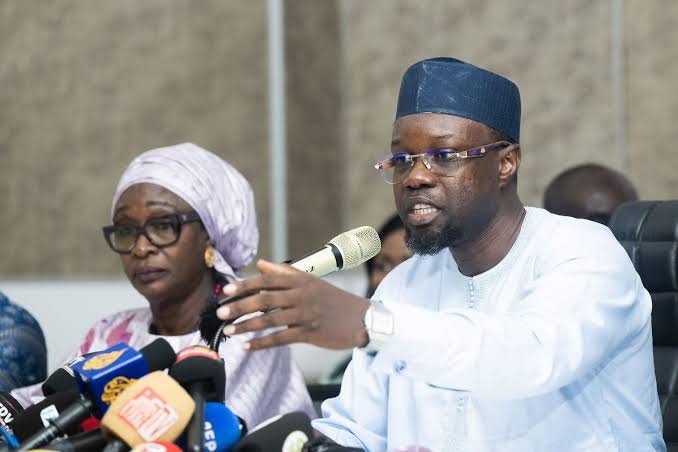
The sell-off followed comments by National Assembly President Ousmane Sonko, who said lawmakers would not support the revised 2026 finance bill or the proposed 2027 budget. His position raises the risk of delays to reforms linked to a proposed $2.2 billion financing programme from the International Monetary Fund (IMF).
According to Tradeweb data, all of Senegal’s euro- and dollar-denominated bonds fell by more than one cent on Tuesday. The country’s 2037 bond suffered a particularly steep decline, dropping 2.166 cents to a bid price of 48.931 cents on the euro, reflecting growing investor concern about the government’s ability to manage its debt.
Sonko, who leads the ruling PASTEF party, remains an influential political figure despite being dismissed as prime minister by President Bassirou Diomaye Faye in May. His party controls 130 of the National Assembly’s 165 seats, giving him considerable influence over the passage of legislation.
Dispute over debt strategy and fuel subsidies
At the heart of the disagreement is the government’s plan to restructure its debt under the G20 Common Framework, an international mechanism designed to help countries facing unsustainable debt burdens negotiate relief with creditors.
Sonko has challenged the need for such an approach, arguing that Senegal faces a cash-flow problem rather than a need to reduce its overall debt burden.
The disagreement comes as the government seeks to rein in public spending, particularly on fuel and energy subsidies, while securing external financing to stabilise the economy.
Senegal’s revised 2026 budget paints a weaker economic picture than initially anticipated. Economic growth is now projected at 2.7%, down from around 5% in the original budget, while the fiscal deficit is expected to widen to 7.6% of gross domestic product (GDP), from 5.4%.
Rising energy subsidy costs are a major contributor to the deterioration. Spending on the subsidies is projected to triple to 790.3 billion CFA francs, equivalent to about $1.36 billion, from an earlier estimate of 250 billion CFA francs ($428.5 million).
Reducing these costs is part of the government’s effort to restore fiscal stability. Its proposed 2027 budget seeks to redirect support towards the most vulnerable households, with the goal of bringing annual energy subsidy costs down to no more than 1% of GDP by 2029.
However, Sonko’s opposition threatens to complicate the passage of the legislation needed to implement these changes.
Debt burden puts pressure on public finances
Senegal’s financial challenges have deepened following the discovery of previously underreported public liabilities.
Government figures put public debt at 105.3% of GDP at the end of 2025. A debt audit conducted the previous year found that public debt, including liabilities associated with state-owned enterprises, had reached approximately 112% of GDP at the end of 2024.
That was significantly higher than the previously reported figure of about 73%, raising questions about the accuracy of the country’s earlier debt assessments and the scale of its repayment obligations.
The findings have intensified pressure on the government to reach an agreement with creditors and demonstrate a credible plan for restoring public finances.
In early September, Senegal reached a staff-level agreement with the IMF for a $2.2 billion, 36-month Extended Credit Facility. The proposed programme is intended to support economic reforms and help the government address its financing challenges.
However, the parliamentary dispute now threatens to delay the budget approval and reform measures underpinning that arrangement.
Investors watch for signs of progress
The immediate concern is whether Senegal can overcome the political standoff and maintain momentum towards an IMF-backed programme and a broader debt restructuring agreement.
Political disagreements can quickly affect investor confidence, particularly in countries already under pressure from heavy debt obligations and limited fiscal room.
The coming weeks will therefore be important in determining whether the government can secure legislative support for its fiscal plans and reassure creditors that it remains committed to addressing its debt challenges.
Until there is greater clarity on the budget, subsidy reforms and debt negotiations, Senegal is likely to remain under scrutiny from international investors.