

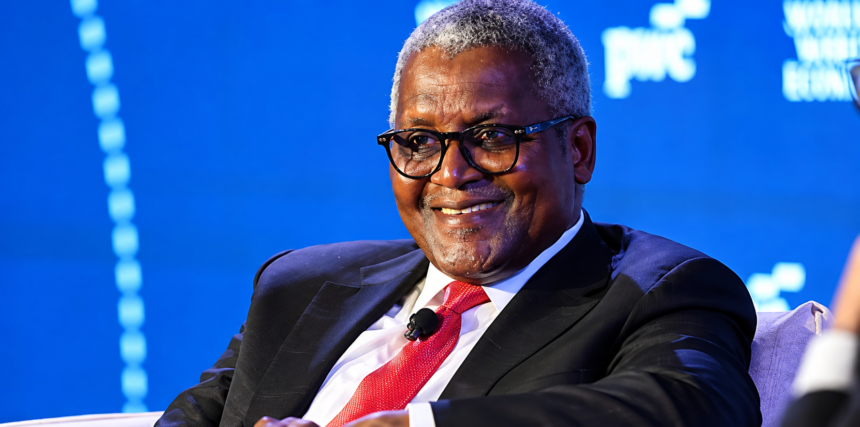
Uganda is seeking investment from Nigerian billionaire Aliko Dangote’s industrial group to develop a refinery, fertiliser production and salt-processing projects estimated at $1 billion, as Kampala pushes to turn its natural resources into locally manufactured products.
The proposed partnership was discussed during a visit by a Ugandan delegation to the Dangote Petroleum Refinery and Dangote Fertiliser facilities in Lagos, Nigeria. The delegation was led by Energy and Mineral Development Minister Dr Monica Musenero Masanza and State Minister for Finance, Planning and Economic Development in charge of Privatisation and Investment, Hajjat Amina Mukalazi.
Uganda is seeking Dangote Group’s involvement in a proposed 60,000-barrel-per-day oil refinery in Hoima, alongside opportunities in fertiliser blending, phosphate processing and salt manufacturing. The projects form part of the country’s broader efforts to reduce reliance on imported finished products and expand domestic industrial production.
The refinery proposal would place Uganda’s petroleum resources closer to the domestic processing stage, while the fertiliser and mineral-processing projects would seek to convert locally available raw materials into products used in agriculture and industry.
Opportunity for Uganda to Develop
During the visit, Mukalazi described Dangote’s experience in building large-scale industrial facilities across Africa as an opportunity for Uganda to develop its own manufacturing base.
“You have shown that an African company can build world-scale industry in Africa and run it by Africans themselves,” she said.
Uganda also sees the proposed refinery as part of a wider regional petroleum supply network. The delegation said the Hoima facility could complement Dangote Group’s planned refinery in Lamu, Kenya, with the Ugandan project serving inland markets while the coastal facility targets maritime and coastal demand.
However, the proposals remain at the investment-discussion stage, with the technical and commercial estimates presented by Uganda still requiring assessment by Dangote’s team.
Kampala is also exploring fertiliser production using its phosphate deposits, a resource it has yet to fully translate into finished industrial products. The government is also considering salt manufacturing and related processing infrastructure, with the projects expected to create employment, support local businesses and develop industrial skills.
“Our crude, our phosphate, our salt are waiting to be turned into fuel, fertilisers and chemicals here in Africa and in Uganda by Africans,” Mukalazi said.
Uganda’s Energy Minister, Musenero, said the visit was intended to draw lessons from Dangote’s industrial operations and identify areas where the group’s experience could be applied to Uganda’s petroleum and fertiliser industries.
Dangote Petroleum Refinery and Petrochemicals Managing Director David Bird said Uganda had the natural resources and workforce needed to support industrial development.
“Uganda has incredible natural resources and human capital,” Bird said, adding that the country also had the ambition and political will to pursue industrialisation.
Uganda’s petroleum and mineral-processing strategic plans put the east african state into focus, with the proposed Hoima refinery and fertiliser projects representing an effort to move beyond exporting raw resources towards producing fuel, chemicals and agricultural inputs within the country.