

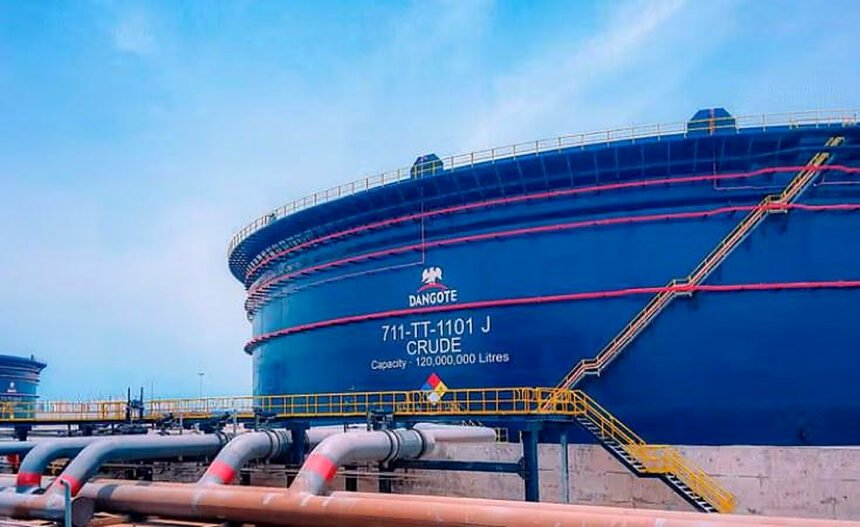
The United Kingdom imported £1.02 billion ($1.35 billion) worth of refined petroleum products from Nigeria in the 12 months to June 2026, as the Dangote Petroleum Refinery expands its international reach.
Data from the UK Government’s Trade and Investment Factsheet, published on November 6, 2026, shows that refined petroleum products accounted for 53.5% of Britain’s total merchandise imports from Nigeria.
The value more than doubled compared with the previous 12-month period.
Nigeria has historically exported crude oil while importing much of its refined fuel requirements. The growing contribution of the 650,000-barrel-per-day Dangote refinery is beginning to reverse that relationship, positioning the country as an increasingly important supplier of finished petroleum products.
By comparison, British imports of Nigerian crude oil fell 56.2% to £550.3 million ($728.6 million), meaning refined fuel purchases were worth approximately 85% more than crude imports.
The reversal is also visible in Britain’s own fuel exports to Nigeria, which fell 42.7% to £772.3 million ($1.02 billion). Nigeria consequently recorded an estimated £245 million ($324 million) surplus in refined petroleum trade with the UK.
The wider export trend is equally striking, with the US Energy Information Administration (EIA), Nigeria’s seaborne petroleum product exports averaged 350,000 barrels per day in the second quarter of 2026, up from 46,000 barrels per day in 2023. Shipments to Europe alone reached 130,000 barrels per day.
“With the increased supply of petroleum products in Nigeria from the country’s largest refinery, imports fell, exports increased, and Nigeria became more self-sufficient in refined petroleum products,” the EIA said.
The figures point to a changing role for Nigeria in global energy markets: moving beyond crude oil exports to becoming a growing supplier of finished fuels to Europe and other African markets.