
By: Terryanne Chebet, Editor-in-Chief, Sable Africa
Welcome to the world of high-stakes international oil finance! If you’ve spent the last several months listening to politicians argue about “G-to-G” and wondering what Kenya had really signed up for, you are not alone.
- Let’s deconstruct the anatomy of this shift.
- The A-to-Z Compendium of the G-to-G Framework
- A — Aramco Trading Fujairah FZE
- B — Briefcase Intermediaries
- C — Central Bank Rate (CBR) Restraint
- D — Deferred Settlement Mechanism (The 180-Day Card)
- E — Escrow Account Architecture (Dual-Currency)
- F — Fixed Premium Penalty (The Motorist Overpayment)
- G — Ghana’s “Gold for Oil” (G4O) Parallel
- H — Hoarding and Speculative Bubbles
- I — Institutional Debt Management Strategy
- J — Just-in-Time (JIT) vs. Just-in-Case (JIC) Collision
- K — KSh 129 Currency Anchor
- L — Letters of Credit (LCs)
- M — Middlemen Distortion
- N — National Forex Reserves Surge
- O — Open Tender System (OTS)
- P — Panic Sourcing
- Q — Queue (The Real Problem G-to-G Solved)
- R — Risk Ratings Upgrade
- S — Supplier Purchase Agreement (SPA)
- T — Transit Fuel Demarcation
- U — Uganda’s Strategic Exit
- V — Volatility Insulation
- W — William Ruto’s Economic Defense
- X — (No Entry. The Letter Got Lost in the Fine Print.)
- Z — Zero-Sum Structural Reality
- So where does that leave us?
- The alphabet doesn’t lie.
Let’s deconstruct the anatomy of this shift.
The Government-to-Government (G-to-G) oil deal was essentially the ultimate corporate "Buy Now, Pay Later" credit card strategy dropped right into the middle of a national economic emergency.Back in March 2023, East Africa’s largest economic hub was running on financial fumes. To understand why the state suddenly threw out the free market and started buying fuel directly from Middle Eastern sovereign states, we have to look past the dense spreadsheets.
As a precursor to @SableAfrica s upcoming deeply technical policy feature, consider this your official, slightly irreverent, data-heavy, master-class alphabet cheat sheet. From absolute economic chaos to record-breaking central bank reserves, here is the verified A-to-Z breakdown of Kenya’s boldest monetary experiment.
The A-to-Z Compendium of the G-to-G Framework
A — Aramco Trading Fujairah FZE
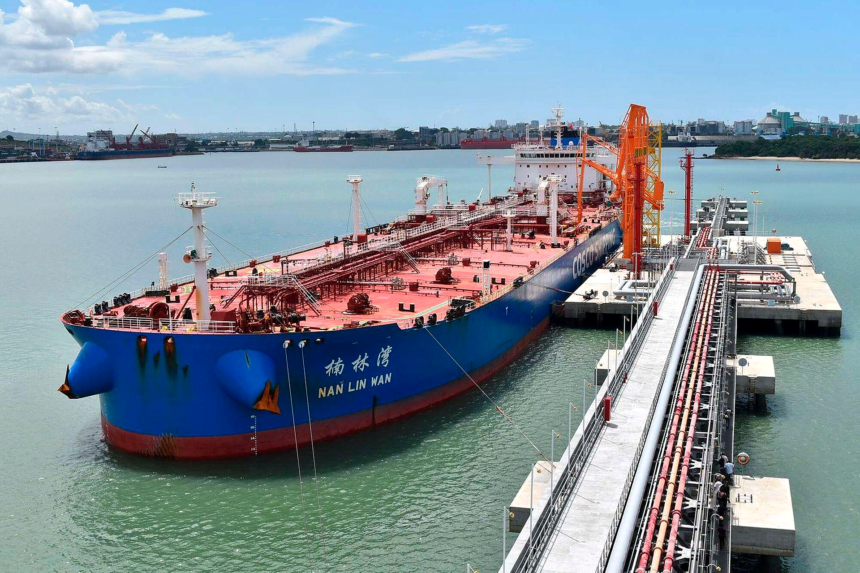
One of the core Middle Eastern energy wholesalers contracted under the initial Master Framework Agreements (MFAs) in March 2023. Alongside Abu Dhabi National Oil Company (ADNOC) and Emirates National Oil Company (ENOC), this state-backed giant agreed to ship refined fuel to Kenya on credit, effectively becoming the country’s primary institutional fuel source.
B — Briefcase Intermediaries
A lesson from history: Experts who love open competition usually warn against these government-to-government deals because they can be a magnet for corruption. In Nigeria, for instance, the state oil company (NNPC) used to skip the open market and hand out contracts to “briefcase companies”, small, unproven middlemen that often only existed on paper. These companies weren’t oil experts; they just sat in the middle, captured profit margins for themselves, and mismanaged public money. To avoid this mess, locked in through international commercial banks, using them as a financial and legal shield to keep the process professional and “de-risked”.
C — Central Bank Rate (CBR) Restraint
The broader monetary backdrop. While the G-to-G deal handled external dollar supply, the Central Bank of Kenya used aggressive domestic cooling mechanisms to combat inflation, maintaining its Central Bank Rate (CBR) at restrictive heights like 8.75% to prevent excess domestic liquidity from putting further pressure on the exchange rate.
D — Deferred Settlement Mechanism (The 180-Day Card)
The financial engine of the entire strategy. Under standard market conditions, when an import tanker arrives, payment must be settled immediately. The G-to-G deal fundamentally altered this by introducing an automatic 180-day grace period for dollar settlement. By delaying the payment due date by six months, the government bought the local banking sector critical time to source foreign currency smoothly and systematically.
E — Escrow Account Architecture (Dual-Currency)
To ensure the Gulf suppliers actually received their money at the end of the 180 days, the National Treasury built a ring-fenced banking structure:
- The USD Escrow Account: Collects foreign currency earnings generated directly from specialised jet fuel sales and transit trade destined for landlocked neighbours, maintaining a protective cushion of up to $1 billion.
- The KSh Escrow Account: Collects local retail cash from fuel purchases, routinely holding an average of KSh 115 billion. These domestic funds are then systematically converted into US dollars over the six-month window as individual payment deadlines approach.
F — Fixed Premium Penalty (The Motorist Overpayment)
The steepest consumer trade-off of the credit line. To secure a 180-day delay on its invoices, Kenya locked in fixed freight and product premiums with Gulf oil majors. Industrial investment data reveals that premiums under the old system averaged $4.51 per litre, but spiked to $7.21 per litre under the G-to-G framework. This meant that when global crude oil prices dropped to steady averages near $75, local pump prices remained artificially high. Motorists collectively paid an estimated KSh 16.4 billion premium markup, which directly raised industrial energy costs to $0.17 per kilowatt-hour, nearly five times higher than regional competitors like Egypt.
G — Ghana’s “Gold for Oil” (G4O) Parallel
Kenya wasn’t the only African country experimenting with state-managed oil interventions. In late 2022, Ghana launched its “Gold for Oil” scheme, attempting to swap physical bullion directly for refined fuel to bypass the dollar market entirely. However, an investigation by the independent policy group IMANI Africa revealed the programme was largely an expensive illusion. It distorted local exchange rates, favoured a single state-aligned importer, and left taxpayers with a heavy fiscal bill when it was quietly shut down. Kenya’s framework avoided these currency conversion traps by sticking to traditional dollar-denominated bank financing.
H — Hoarding and Speculative Bubbles
The destructive market behaviour that made the deal necessary in the first place. In early 2023, under the old Open Tender System, over 100 private oil marketing companies had to round up roughly $500 million within a strict five-day window of fuel cargo arrivals. When dollars became scarce, these companies began aggressively hoarding foreign exchange, over-ordering cash from local banks, and driving the Shilling into a downward spiral.
I — Institutional Debt Management Strategy
The overarching fiscal blueprint. The National Treasury’s Medium Term Debt Management Strategy had to explicitly balance these state-negotiated commodity credit structures against looming international debt payments, such as the massive $2 billion Eurobond obligation, making local exchange rate stability a mandatory priority to prevent an outright default.
J — Just-in-Time (JIT) vs. Just-in-Case (JIC) Collision
The G-to-G deal forced a brutal pivot from Just‑in‑Time logistics, the lean, efficient model where fuel arrives as it’s sold, to a Just‑in‑Case state‑managed buffer. Under the old Open Tender System, private importers held minimal stock, betting on smooth dollar flows. When foreign exchange seized up, that bet failed catastrophically. The G‑to‑G framework overcorrected: it mandated guaranteed cargo volumes six months out, creating a massive, expensive inventory cushion. The trade‑off? Kenya traded lean efficiency for expensive insurance. Tankers kept arriving, but at a fixed premium that punished consumers at the pump—a classic case of solving a liquidity crisis with a solvency hangover.
K — KSh 129 Currency Anchor
The primary metric of success championed by the Central Bank. Shifting the massive weight of petroleum importation away from the retail banking sector immediately stopped the currency’s slide. The local currency rebounded and held steady at a predictable anchor of KSh 129 per dollar for over 11 straight months, giving the private sector long-term operational predictability.
L — Letters of Credit (LCs)
The legally binding financial guarantees that kept the oil flowing. KCB Group was a primary leader in the framework that provided the Letters of Credit (LCs) to international oil companies followed by other banks, including Equity bank, NCBA bank, & Afrexim, among others, who issued these high-value credit instruments to international oil suppliers. Backed by the state, these LCs guaranteed that the Gulf nations would receive full payment at the end of the 180 days, ensuring continuous fuel delivery despite local cash constraints.
M — Middlemen Distortion
The primary free-market failure of the deal. By replacing the competitive open tender system with state-to-state contracts, the government concentrated clearing and distribution rights into a tiny, closed tier of handpicked private oil marketing companies. Critics noted that this concentration removed transparent price competition, allowing selected corporate insiders to capture comfortable margins while retail consumers shouldered high pump prices.
N — National Forex Reserves Surge
The ultimate victory for central bankers. Freeing the Central Bank from constantly using its foreign currency reserves to defend the shilling against monthly oil import spikes allowed the state to build up its financial defences. Supported by strong diaspora remittances that climbed past $5 billion, national foreign exchange reserves surged to record highs between $13.2 billion and $14.59 billion, pushing Kenya’s statutory import cover to a comfortable 5.6 to 6.2 months.
O — Open Tender System (OTS)
The transparent, competitive market system used by Kenya before March 2023. Under the OTS, private oil distributors bid each month openly, with the lowest bidder winning the right to import fuel at prices tightly linked to global spot benchmarks. While it kept prices competitive for consumers, it collapsed entirely when local banks ran out of the immediate dollar liquidity required to settle the monthly invoices.
P — Panic Sourcing
The structural flaw of the old OTS framework. Private fuel companies were forced to collectively scramble for approximately $500 million within a compressed five-day window of tanker arrivals, starving the rest of the manufacturing and agricultural import sectors of vital foreign cash.
Q — Queue (The Real Problem G-to-G Solved)
Before G-to-G, Kenya had a dollar queue problem, not a fuel problem.
Every month, private oil marketers needed to find $500 million within five days of a tanker arriving. When dollars were scarce, they panic-ordered, hoarded; and crowded out every other importer, manufacturer, farmer, and airline. The entire economy stood in line behind fuel.
G-to-G didn’t create new dollars. It let Kenya skip to the front of the queue by deferring payment for 180 days. That six-month window gave banks time to source foreign currency calmly, without the monthly fire drill.
R — Risk Ratings Upgrade
The international payoff of currency stability. Shifting the country’s oil demand out of the spot market reassured international rating agencies like Moody’s. Confident that Kenya wouldn’t suffer a sudden balance-of-payments collapse, Moody’s upgraded the nation’s sovereign credit rating from Caa1 to B3, giving Kenya more favourable access to global capital markets.
S — Supplier Purchase Agreement (SPA)
The core legal contract was signed behind closed doors. The multi-billion-dollar SPA outlined the mandatory cargo minimums, default procedures, and fixed financial premiums. Opposition leaders and civil society groups fiercely attacked this document, labelling the entire framework a “scam” due to the state’s refusal to release the full, unredacted contracts for public audit.
T — Transit Fuel Demarcation
A crucial logistical boundary is built into the banking rules. Fuel destined for transit to landlocked neighbouring economies had to be settled exclusively in hard US dollars up front. This strict segregation prevented neighbouring nations from inadvertently draining Kenya’s local currency escrow accounts to fund their own energy infrastructure.
U — Uganda’s Strategic Exit
The primary geopolitical disruption to the programme. Disturbed by the high fixed premiums and uncompetitive transport costs generated under Kenya’s state-negotiated model, Uganda abruptly walked away from the shared pipeline logistics framework. Kampala handed exclusive oil import rights to the state-owned Uganda National Oil Company (UNOC), heavily reducing regional transit volumes passing through Mombasa and creating logistical friction across the East African Community.
V — Volatility Insulation
The primary operational goal achieved by the strategy. By smoothing out massive currency requirements into predictable, incremental weekly amounts, the G-to-G deal successfully insulated the wider domestic marketplace from erratic fuel price shocks and sudden external currency spikes.
W — William Ruto’s Economic Defense
The political architect behind the strategy. Facing immense domestic pressure over high pump prices and the slow pace of currency stabilisation, President William Ruto forcefully defended the G-to-G model, arguing it acted as an essential macroshield. Ruto asserted that without clamping down on the monthly spot-market dollar panic via state-to-state credit lines, Kenya would have plunged into a far more catastrophic fuel shortage and balance-of-payments crisis.
X — (No Entry. The Letter Got Lost in the Fine Print.)
Honestly? We searched the contracts, the escrow sheets, the supplier agreements. X wasn’t there. Maybe it’s the variable no one solved. Maybe it’s the spot on the map where Uganda walked away. Or maybe X is just the letter you skip when you’re tired of alphabet gimmicks.
Either way: X marks nothing. Move along.
Z — Zero-Sum Structural Reality
The definitive takeaway. While the G-to-G agreement expertly restructured the timing of Kenya’s dollar outflows, it could not change a fundamental economic reality: a nation that consistently buys more foreign goods than it sells abroad will eventually face a currency crunch. The framework proved that state credit lines can buy an economy time during a crisis, but they are no replacement for real economic productivity and strong exports.
So where does that leave us?
The G-to-G deal was never a masterclass in economic virtue. It was a masterclass in buying time, expensive, opaque, politically messy time. Kenya avoided a balance-of-payments blowup, stacked record reserves, and the shilling stopped free-falling. Those are real wins. But the same deal squeezed motorists for billions in hidden premiums, chased Uganda out of the corridor, and turned fuel import into a closed shop of Gulf majors and well-connected locals.The alphabet doesn’t lie.
So here is where we stand.
From A to Z, the G‑to‑G deal did what it needed to do. It sustained the shilling when dollars were ghosts. It kept oil marketing companies afloat. And most of all, it provided something Kenya had lost: comfort, not cheap fuel, but fuel. When the foreign exchange taps ran dry, the tankers still arrived.
But a tourniquet is not a long-term strategy. And with import cover hovering about 4 months above the statutory minimum, yes, but hardly a reason to celebrate; the window of comfort is narrower than anyone would like.Did you find the missing letter? The missing letter is Y. And yes, we know why does not start with ‘Y’. Because the question everyone avoided during the G‑to‑G years was the one that refused to spell itself properly:
Why stop here?
The shilling is (seemingly) stable. The OMCs are standing. Kenya has time; not infinite, but real. Now comes the hard part: a reformed open tender system with dollar buffers. A hybrid model that keeps state-backed credit for emergencies but returns to competitive bidding for price sanity. Or an honest admission: the G‑to‑G deal was designed for an emergency, and emergencies end.
Y — for Why we are not done yet.