

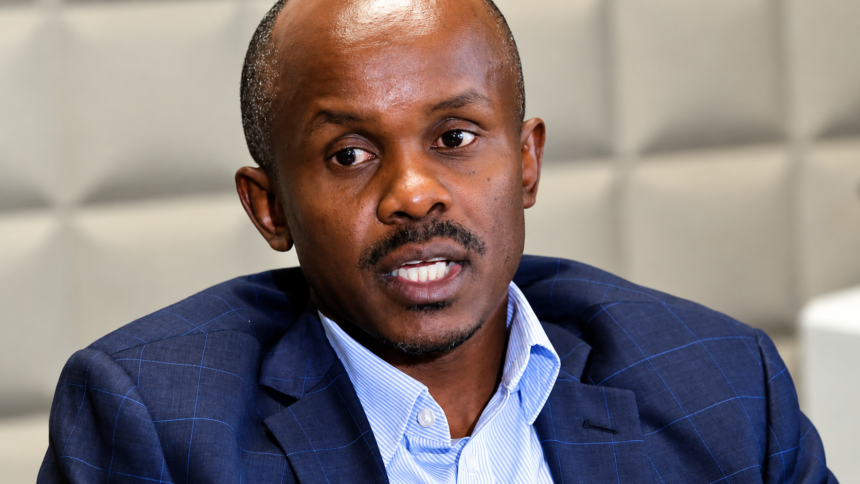
On July 8, Kenya’s Treasury Cabinet Secretary John Mbadi gazetted the appointment of the fund’s first Board of Directors, naming Centum Investment Company chief executive James Mworia , investment banker Fahima Ali Ahmed Zein, corporate finance specialist Christopher Kibui Maranga, and infrastructure procurement expert @Latoya Ouna as independent directors, alongside National Treasury Director General for Public Investments @Lawrence Kibet and former National Bank of Kenya chairman Mohammed Abdirahman Hassan as public officer appointees.
The board appointment is the opening move in a longer sequence. The board’s most consequential near-term task is the recruitment of the fund’s first chief executive, the person who will translate a legal architecture into an operating institution, set its investment culture and establish its credibility with the pension trustees, insurers, lenders and co-investors whose capital the fund needs to attract.
Kenya now has weeks, not years, to get that hire right.
Kenya’s fiscal arithmetic explains the urgency behind the National Infrastructure Fund. In the 2024/25 financial year, 71.2 per cent of all government revenue went toward servicing debt, leaving little room for direct infrastructure spending even as the country’s needs kept growing.
Kenya requires more than twelve billion dollars a year in infrastructure investment through 2040 to meet its development goals, against an estimated financing gap of roughly two billion dollars annually. Public debt sits close to seventy percent of GDP. Borrowing more, the traditional route, was becoming harder to justify and harder to sustain.
The National Infrastructure Fund Act, 2026, is Kenya’s answer to that arithmetic. Signed into law by President William Ruto, the Act establishes the fund as a body corporate with legal personality of its own, able to own property, enter into contracts and invest directly in projects.
Unlike a conventional state financing vehicle, the fund is explicitly barred from borrowing or taking on credit against its own balance sheet. It can deploy capital, but it cannot leverage the state’s name to raise fresh debt. That single design choice is the clearest signal of what kind of institution Kenya is trying to build: an equity-oriented investment vehicle rather than another lender of last resort.
Kenya’s insistence on establishing the fund’s legal status before doing anything else was to ensure the corporation exists in law before it can hold assets, sign contracts, appoint directors, or hire a chief executive officer.
The Act creates a two-tier governance structure to do this cleanly. A Governing Council, chaired by Mbadi and including Central Bank of Kenya Governor Kamau Thugge, Attorney-General Dorcas Agik Oduor, and independent members Benedict Oramah (former president of the African Export-Import Bank), Kenya Pipeline Company chairperson Faith Boinett, KCB Group chief executive Paul Russo , and financial services executive Richard Etemesi was constituted by presidential notification in April and sets policy direction, including a five-year Investment Policy that must itself be approved by the National Assembly.
The income the fund earns is held at the Central Bank of Kenya rather than in a private account. None of that guarantees good governance, but it gives Kenya’s Parliament, auditors, and civil society formal points of entry into a fund that would otherwise operate largely outside the ordinary budget cycle.
Civil society groups have already filed at least two petitions challenging aspects of the fund’s legality, questioning whether its corporate structure and ringfenced financing model adequately protect public finance principles and constitutional safeguards around debt and parliamentary oversight.
The projects earmarked for NIF financing are the ones that most plausibly generate the commercial returns the fund’s structure demands. They include the modernisation of Jomo Kenyatta International Airport, a first phase estimated at roughly 154 billion shillings that would expand annual passenger handling capacity from about 7.5 million to 22 million; the extension of the Standard Gauge Railway to Malaba; some 2,500 kilometres of dual carriageway highways, including stretches such as Rironi-Naivasha-Nakuru-Mau Summit, Athi River-Namanga and Mau Summit-Eldoret-Malaba; roughly 10,000 megawatts of new clean energy capacity; and an extensive dam and irrigation programme spanning fifty mega dams, two hundred micro-dams and more than a thousand smaller structures.
Capital has started moving, though slowly relative to the scale of the ambition. The partial privatisation of Kenya Pipeline Company through an initial public offering in April raised about 106.7 billion shillings, roughly 820 million dollars, and by May, President Ruto reported that the fund had mobilised a total of 129 billion shillings in its first four months. That figure fell well short of the 2.5 trillion shillings Ruto had originally targeted for the same period, an early gap between rhetoric and receipts that Kenya’s institutional investors are watching closely. Further capital is expected from the sale of government shares in Safaricom and from an expanded Railway Development Levy.
Kenya’s own experience with public financing vehicles gives it reason for both hope and caution. The Nairobi Securities Exchange has already shown that domestic investors will take infrastructure exposure through the market, with the Spearhead Africa Infrastructure Fund launched to offer local-currency access to infrastructure returns, and private vehicles such as Everstrong Kenya Infrastructure Fund demonstrating that specialised capital will come to East Africa when the structure fits. That existing ecosystem is precisely why the NIF’s discipline matters. If the fund duplicates what those vehicles already do, it adds bureaucracy without solving the underlying financing bottleneck. Its usefulness depends on occupying a genuinely different niche: mobilising larger, more patient pools of capital and de-risking projects that are too large or too early-stage for listed retail-style funds to touch alone.
Kenyan officials have repeatedly reached for Singapore’s Temasek as the aspirational benchmark, and the comparison is instructive on method as much as on scale. Temasek reported a net portfolio value of 518 billion Singapore dollars as at 31 March 2026, up 49 billion dollars over the year and representing a doubling of its portfolio over the past decade, with a twenty-year total shareholder return of 6.8 per cent.
What makes Temasek relevant to Kenya’s debate is not its size but its independence: it is widely regarded as a commercially disciplined allocator of capital across sectors including energy, transport and agriculture, largely insulated from day-to-day political direction. That insulation, more than any single number, is what the NIF’s design still has to prove it can deliver.
India’s National Investment and Infrastructure Fund is the closer emerging-market peer, structured as a company with minority government ownership that uses public capital to anchor and crowd in private and sovereign investors.
It is a useful reference for Kenya’s ambition to treat state-derived capital as anchor money rather than the only source of funding, though analysts at the Institute of Economic Affairs Kenya caution that NIIF itself has not achieved the tenfold leverage ratios that some blended-finance projections assume, a caution Kenya would do well to apply to its own five-trillion-shilling target. Australia’s Future Fund and the UAE’s Mubadala offer useful lessons in professionalism and scale but operate inside far deeper capital markets and stronger fiscal positions than Kenya’s, which limits how directly they translate.
The development-bank comparators sharpen the picture differently. The Canada Infrastructure Bank illustrates how a public institution can focus on revenue-generating projects while deliberately avoiding crowding out private lenders, a balance Kenya will need to strike carefully, given how much of its own capital stack the NIF is likely to want to provide in any single project.
The UK Infrastructure Bank shows how public capital can co-invest with pension funds and sovereign investors on strategically important but not always immediately bankable projects, a model with obvious relevance to Kenya’s clean energy targets.
Brazil’s BNDES offers perhaps the clearest institutional precedent, having evolved from a direct lender into a more catalytic institution that increasingly seeks to crowd in private capital rather than substitute for it, which is the same philosophical shift the NIF is attempting.
China Development Bank, different again in scale, underscores the importance of long-term local-currency financing, a point that matters for Kenya given how often currency mismatches have undone otherwise viable projects financed in dollars.
Laid alongside these comparators, the National Infrastructure Fund is easier to place. It is not a sovereign wealth fund in the classical sense, since it is not primarily about intergenerational savings or macroeconomic stabilisation. It is not a conventional development bank either, since it is explicitly barred from lending against its own balance sheet. It sits in a narrower category: a commercially managed state investment vehicle for infrastructure delivery, closer in spirit to NIIF and Temasek than to a traditional public works ministry.
That positioning explains both the appeal and the risk. The appeal is that Kenya gains a vehicle that can sit between the Treasury and the market, absorbing state-derived capital and making infrastructure genuinely investable for domestic pension funds and insurers who need long-duration assets.
The risk is that the fund becomes confused about which of those two identities it holds. Too close to a ministry, and investors will not trust its capital allocation. Too close to a private fund, and its public legitimacy, along with the parliamentary and audit oversight built into its founding Act, will thin out.
The board’s formation was the first real signal of intent, and the composition, weighted toward investment banking and capital-markets expertise rather than political appointees, suggests an effort to anchor the fund in commercial credibility from the outset. The chief executive search that follows will matter more.
Kenya needs someone who can speak fluently in the language of project finance to institutional co-investors while remaining accountable to Parliament and the public in the language the Act demands.
After the CEO is named, the next tests follow in quick succession: parliamentary approval of the Investment Policy, the pace and scale of privatisation proceeds actually reaching the fund, and, most importantly, whether the projects chosen and the risk retained by the state reflect the catalytic model Kenya says it is building rather than a repackaged version of the borrowing it was designed to replace.