

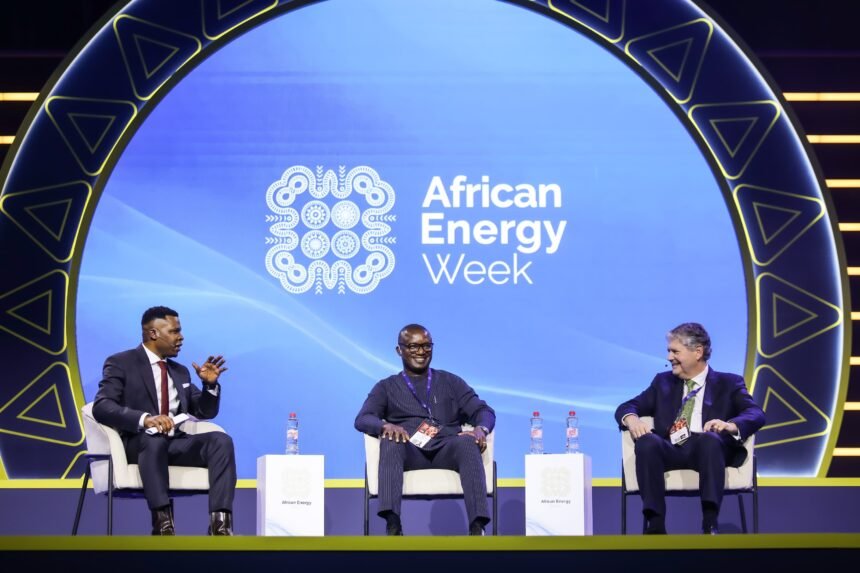
Africa’s energy sector is attracting billions of dollars in new investment, but industry leaders say the continent must do more to ensure its oil and gas wealth translates into jobs, industrial growth and better economic opportunities for its people.
The call came as African Energy Week (AEW) 2026 opened in Cape Town, South Africa, bringing together governments, energy companies, investors and industry experts to discuss the future of the continent’s energy sector.
The five-day event, which began in 2021, has become an important platform for securing investment, discussing energy policy and exploring ways to expand access to reliable and affordable power.
This year’s edition has already recorded deals worth approximately $10 billion, according to Verner Ayukegba, senior vice president of the African Energy Chamber.
“This year at AEW, we have already seen 10 billion dollars worth of deals. Angola for example where we have seen EduEnergias take over some of the legacy assets given by Chevron. We also seen Senegal makes significant announcements around gas projects in that country. And the same thing is happening in Nigeria around what AMNI is doing and getting more gas,” said Ayukegba.
Angola, Senegal and Nigeria are among the countries attracting attention through new investments and developments in oil and gas.
In Angola, energy company Etu Energias has taken over legacy assets previously held by Chevron. Senegal has announced significant gas-project developments, while Nigeria is working to secure additional gas supplies for Train 7 of its liquefied natural gas (LNG) project.
Another major project on the horizon is the proposed Nigeria-Morocco gas pipeline, which could require investment running into tens of billions of dollars as it advances through its planned phases.
“The opportunity is much bigger than the $10 billion we have seen so far,” Ayukegba said, pointing to the scale of investment required to develop Africa’s energy resources.
Turning energy into wealth
Beyond the headline investment figures, a central question at the conference is how African countries can use their natural resources to build stronger economies.
Godfrey Moagi, chief executive of the South African National Petroleum Company, said the benefits of oil and gas development should extend beyond exploration and extraction.
“We’ve got a very big opportunity. We’re [going to add] more data centers, you’ve got a lot of gas, you need a lot of energy. And I think we are going to have to do that to deal with unemployment. Just [conducting] exploration and extracting that gas and oil brings unemployment down, but actually imagine now, if we actually get [related] industries, it becomes very powerful,
He pointed to the growing demand for electricity from data centres and other energy-intensive industries as an opportunity for Africa to expand its industrial base.
As digital infrastructure grows, countries will need more reliable power to support data centres, manufacturing and other businesses.
Moagi argued that while exploration and extraction can create jobs, the economic impact could be much greater if countries also develop industries around those resources.
That means moving beyond exporting raw commodities towards activities such as processing, manufacturing, energy services and infrastructure development.
Cooperation key to Africa’s energy future
South Africa has called for stronger cooperation among African countries to ensure reliable and affordable energy supplies, particularly as geopolitical tensions and disruptions in global markets affect prices and investment decisions.
The continent is creating the conditions that allow projects to proceed, energy supplies to expand and businesses to grow.
That includes improving infrastructure, attracting long-term financing and developing policies that encourage investment while ensuring local communities benefit.
The $10 billion in deals announced at African Energy Week signals continued interest in Africa’s energy resources. But the lasting measure of success will be whether those investments help create employment, support industries and deliver more reliable energy to African households and businesses.