

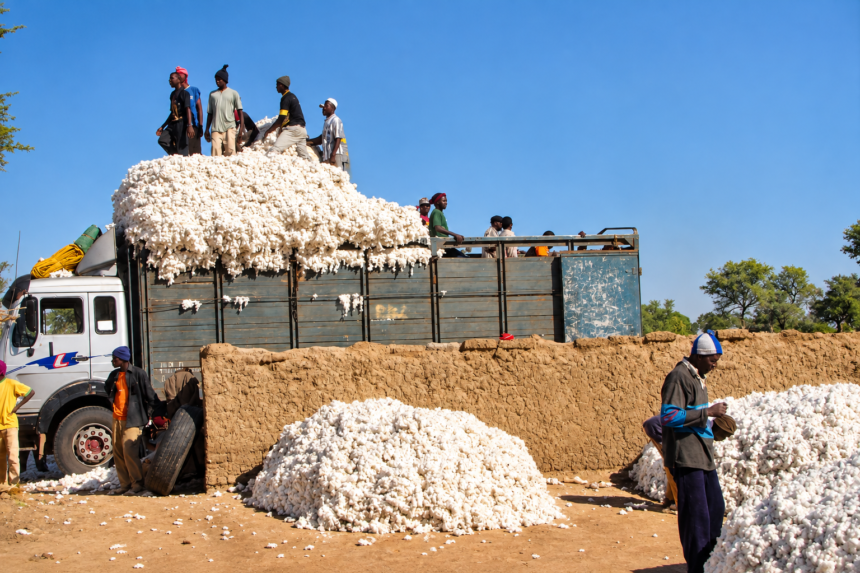
Angola is looking to Brazilian expertise, technology and investment to rebuild its cotton industry, after production fell dramatically short of a government target set more than a decade ago.
Angola produced just 3,300 tonnes of seed cotton in 2024, against a target of 100,000 tonnes a year under a cotton recovery programme launched in 2014. An Angolan delegation from the Ministry of Industry and Commerce and the Development Bank of Angola travelled to Brazil this month to explore how the country can rebuild its cotton value chain.
The delegation met the Brazilian Cotton Producers Association (Abrapa) to study farming techniques, mechanisation, technology, quality control and access to international markets. It also visited Brazil’s cotton analysis centre, where officials examined systems used to test and classify cotton fibre.
The timing is significant. Since May 15, 2026, Angola has allowed the import and production of genetically modified cotton and castor seeds under specified regulatory conditions, ending more than two decades of restrictions.
A tiny export business today
Angola’s cotton industry remains a fraction of what it could become. In 2024, the country exported only $47,240 worth of cotton, according to World Bank trade data. South Africa was the largest destination at $19,580, followed by Brazil at $14,020 and the Democratic Republic of Congo at $12,430.
The government is hoping Brazil can help change that picture. Brazil produced about 4 million tonnes of cotton in the 2025/26 season and exported nearly 3.4 million tonnes, making it the world’s largest cotton exporter.
Genetically modified varieties accounted for about 99% of Brazil’s cotton-growing area in the 2024/25 season.
For Angola, the ambition goes beyond growing more cotton. The country wants to reconnect farms with processing, textiles and export markets, creating a value chain that can generate jobs and reduce dependence on imported raw materials.
The revival could also breathe new life into Angola’s textile industry. The Comandante Bula textile factory, for example, is being assessed for full reactivation, with preliminary estimates suggesting it could create about 5,000 direct jobs if fully operational.
The gap is enormous, from 3,300 tonnes produced today to a 100,000-tonne target. Whether Brazil can help Angola close it will depend not only on seeds and technology, but also on financing, infrastructure, farmer support and investment in processing capacity.