
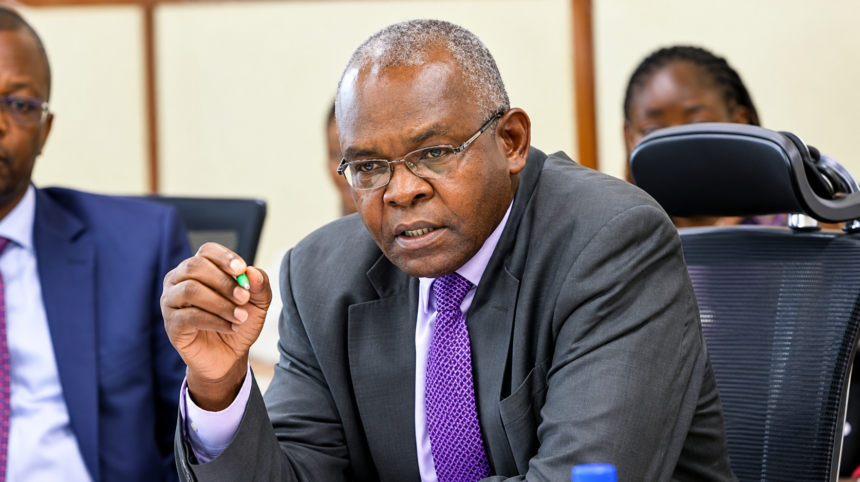
Kenya is negotiating a new financing programme with the International Monetary Fund (IMF), but the timing of an agreement remains uncertain as both sides work to determine its structure and conditions, Central Bank of Kenya (CBK) Governor Kamau Thugge has said.
Speaking in an interview on Thursday on the sidelines of the IMF Annual Meetings in Bangkok, Thugge said the start date would depend on how the government and the lender reconcile their positions.
“We have to see their thinking, our thinking, and how the program would look like — all those would be a determinant as to when the program can start,” he said.
Kenya prefers a funded programme that would provide concessional financing, allowing the government to reduce its reliance on expensive domestic borrowing.
However, Thugge said the country was not facing an immediate balance-of-payments crisis, citing foreign exchange reserves equivalent to about six months of import cover and a stable shilling.
“We don’t have a balance of payments need,” he said.
An IMF team is expected to visit Nairobi in early December for its regular Article IV assessment of Kenya’s economy and discussions on a successor programme.
The talks come after Kenya’s previous four-year, $3.6 billion IMF facility ended prematurely in 2025, leaving the country without a final disbursement of about $850 million after it failed to meet key programme targets, including reducing the budget deficit and increasing tax revenue.
Kenya remains at high risk of debt distress, according to the IMF, limiting its room to borrow and placing pressure on the government to manage public finances carefully. Efforts to raise taxes have previously triggered deadly protests and legal challenges.
The government has increasingly turned to multilateral lenders such as the IMF and World Bank for cheaper financing while refinancing maturing Eurobonds to spread out repayments and ease debt pressures.
Kenya weighs borrowing options
Thugge said the government had completed the recruitment of lead arrangers for its $5.4 billion external borrowing plan for the financial year ending June 2027.
“We are in a position to go into the market as quickly as possible,” he said, although volatility in global financial markets could affect the timing and cost of borrowing.
The government is considering several financing options, including Eurobonds, debt swaps, Samurai bonds in Japan, Islamic sukuk and Panda bonds issued in China.
Kenyan Eurobond yields have risen by as much as 100 basis points since the beginning of September, reflecting growing investor caution. A stronger US dollar and rising American Treasury yields have also pushed investors away from riskier emerging-market assets.
Thugge said Kenya had not considered a currency swap arrangement with China, unlike Zambia, which is discussing a deal that could allow Chinese buyers to pay for its copper in renminbi.
Middle East tensions pose growth risk
The governor identified the Middle East crisis as the main external threat to Kenya’s economic outlook, warning that escalating tensions could weigh on growth.
An expected super El Niño weather pattern, which could bring flooding to parts of the Horn of Africa, is another concern.
“This will have a negative impact on growth,” Thugge said.
Despite these risks, Kenya’s economy is projected to grow by 5% in 2026 and accelerate to 5.3% in 2027, according to the governor.