
Kenyan businesses across several sectors have attracted financing from the International Finance Corporation (IFC), the private-sector investment arm of the World Bank Group.
Through equity investments, loans, guarantees and other financing arrangements, IFC has supported companies seeking to expand operations, strengthen their balance sheets, improve efficiency and reach more customers.
Among the notable examples is Naivas, the supermarket chain that attracted a $15 million equity investment from IFC in 2020. Other companies with documented IFC investment activity include Equity Group Holdings, KCB Bank Kenya, 4G Capital, National Cement and Kenya Mortgage Refinance Company.
Retail
In 2020, IFC invested $15 million in the supermarket chain as part of a consortium that acquired a combined 30% minority stake for approximately KSh6 billion. Other investors included Amethis, MCB Equity Fund and Germany’s DEG.
Beyond the capital injection, IFC supported improvements in food safety, supplier audits and environmental and social management practices.
The investment relationship later came to an end following an ownership change in 2022, when a consortium led by Mauritius-based IBL Group acquired the existing investors’ stake.
Latest on the list is Quickmart’s 6.5% stake for KSh1.94 billion ($15 million), or 258.67 million shares, which is subject to approval by its board.
Banks and fintech firms
Financial services feature prominently in IFC’s Kenyan investment portfolio.
KCB Bank Kenya attracted attention in 2026 when IFC announced a subordinated loan of up to $150 million to support the bank’s capital position and lending capacity.
Equity Group Holdings has also had a longstanding relationship with IFC through investments and financing initiatives supporting financial inclusion and business lending.
In the fintech sector, 4G Capital has benefited from IFC-backed risk-sharing arrangements designed to expand lending to micro and small businesses.
These investments reflect development-finance priorities, enabling businesses to access credit while helping financial institutions serve customers who may struggle to obtain conventional financing.
Manufacturing and healthcare attract attention
IFC’s interest also extends to companies involved in producing goods and delivering essential services.
Royal Apparel EPZ Limited has attracted IFC financing for garment-manufacturing expansion, including plans for a new factory near Nairobi ($15 million loan package). National Cement has featured in IFC’s historical investment activity supporting expansion in the cement industry.
In healthcare, Revital Healthcare is among the Kenyan businesses appearing in IFC’s investment disclosures.
Such investments point to the role international financiers are playing in expanding domestic production, supporting employment and strengthening supply chains.
Housing is another area of interest
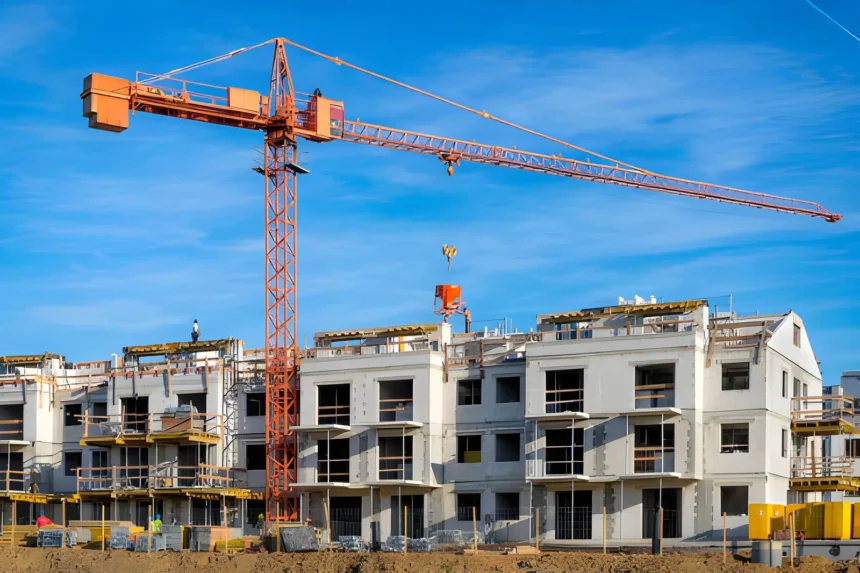
Affordable housing and mortgage finance have also featured in IFC’s Kenyan activities.
Kenya Mortgage Refinance Company received a $2 million IFC equity investment in 2021, supporting the development of long-term funding for mortgage lending.
Centum Real Estate has also attracted IFC financing for affordable housing development, while IFC has backed green and resource-efficient housing initiatives through investment vehicles operating in Kenya.
IHS Kenya Green Housing is an investment platform for green, affordable residential development in Kenya, established by International Housing Solutions (IHS). In 2024, IFC invested up to approximately €19.3 million in a co-investment package for resource-efficient affordable housing.
The underlying objective is to help address the financing constraints that make home ownership difficult for many households while encouraging investment in more sustainable buildings.
What these investments tell us about Kenya
IFC’s activity across retail, banking, fintech, manufacturing, healthcare and housing demonstrates that international capital is not confined to listed companies or traditional infrastructure projects.
Privately owned businesses can also attract investment when they offer credible expansion plans, sound governance, viable business models and the potential to generate economic or social benefits.
However, IFC’s involvement takes different forms. An equity investment may give it an ownership stake, while a loan creates a creditor relationship and a guarantee helps share lending risk.
A disclosed investment also does not automatically mean that IFC remains involved today.