

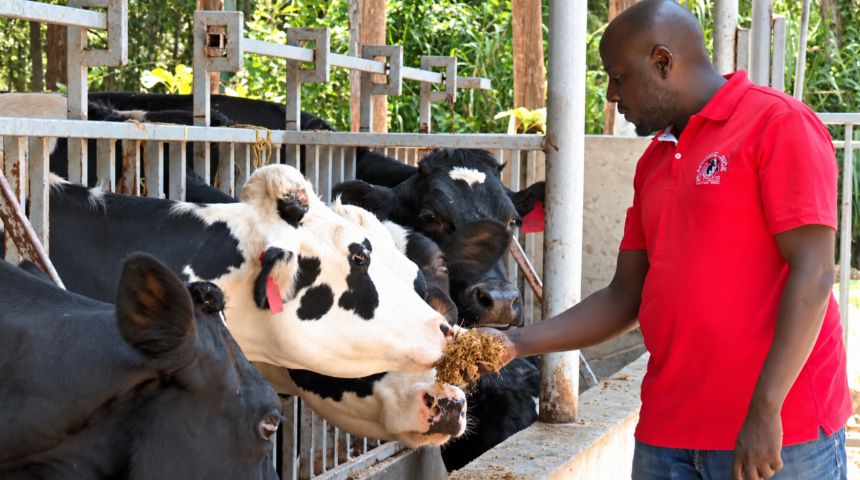
Kenya’s prolonged drought is tightening the country’s milk supply, exposing the growing economic cost of climate change on farmers, dairy processors and consumers.
As pasture dries up and animal feed becomes increasingly expensive, dairy farmers are being forced to reduce production or raise prices to keep their businesses afloat. The effects are already reaching supermarkets, where fresh milk is becoming harder to find as demand continues to outstrip available supplies.
The shortage shows the growing food security challenge facing Kenya and other African countries as increasingly unpredictable weather patterns threaten agricultural production and household incomes.
Drought pushes milk production lower
Data from the Kenya Dairy Board shows that milk processors purchased more than 81 million litres of raw milk through formal channels in July, representing a 5.8% decline compared with the same period last year.
Agriculture ministry officials attribute the decline largely to deteriorating pasture and rising cattle feed costs, which have increased the financial pressure on farmers.
For dairy producers, the challenge is not simply producing less milk. It is doing so at a time when the cost of maintaining their herds is rising sharply.
Norah Makena, a farm technical supervisor near Nairobi, said feed costs had climbed significantly, forcing farmers to make difficult decisions about how much they could afford to feed their animals.
“The drought has really affected us,” Makena said, explaining that feed costs had risen from about 55% to 70% since the beginning of the year.
The increase leaves farmers with fewer resources to sustain production. Reducing feed quantities may help control expenses in the short term, but it can also lower milk yields and weaken the animals’ physical condition, creating further challenges for future production.
Higher farm costs threaten consumer prices
The pressure is spreading beyond farms to dairy processors and retailers, with farmers increasingly relying on higher selling prices to cover their expenses.
Victor Kipruto, a farm manager, described the current period as one of the most difficult years for dairy producers, pointing to declining output and shrinking profit margins.
He warned that farmers could ultimately pass the additional costs on to consumers, adding to the pressure on household budgets.
“The cost of living will also increase for individuals and it will affect the entire economy,” Kipruto said.
The concern is particularly significant in Kenya, where milk is a daily staple in many households and an essential part of the country’s tea-drinking culture. Higher milk prices can place additional strain on families already managing rising food and other living expenses.
For businesses across the dairy value chain, the squeeze also threatens profitability as they contend with reduced supplies and higher procurement costs.
Nairobi retailers struggle to keep shelves stocked
In Nairobi, the shortage is becoming increasingly visible in supermarkets, where fresh milk shelves are frequently left empty as retailers struggle to replenish stocks consistently.
One supermarket manager said deliveries often arrive in the morning but are quickly exhausted as customers rush to purchase milk.
“The demand is very high,” the manager said, noting that supplies can run out by around 9 a.m. to 11 a.m.
The situation illustrates how a climate-related shock at farm level can quickly disrupt the wider food supply chain, affecting availability, prices and consumers’ everyday shopping decisions.
Rainfall offers hope, but recovery may take time
There is some hope of relief. Kenya’s meteorological department has forecast above-normal rainfall across approximately 80% of the country during the October-to-December period.
Improved rainfall could help regenerate pasture, increase water availability and ease pressure on animal feed supplies. However, a return to favourable weather conditions will not necessarily translate into an immediate recovery in milk production.
Farmers will need time to restore grazing areas, improve their animals’ condition and rebuild output. Until then, consumers and dairy businesses may continue to face supply disruptions.
Meanwhile, the government is strengthening market monitoring and promoting improved cold-chain logistics to reduce milk losses. Authorities are also encouraging the production and consumption of alternative milk sources, including camel, goat and buffalo milk, to reduce reliance on cattle.
Earlier in October, China provided Kenya with a $2 million grant, half of which is intended to support drought response efforts, with the remainder directed towards strengthening preparedness for Ebola-related threats.