

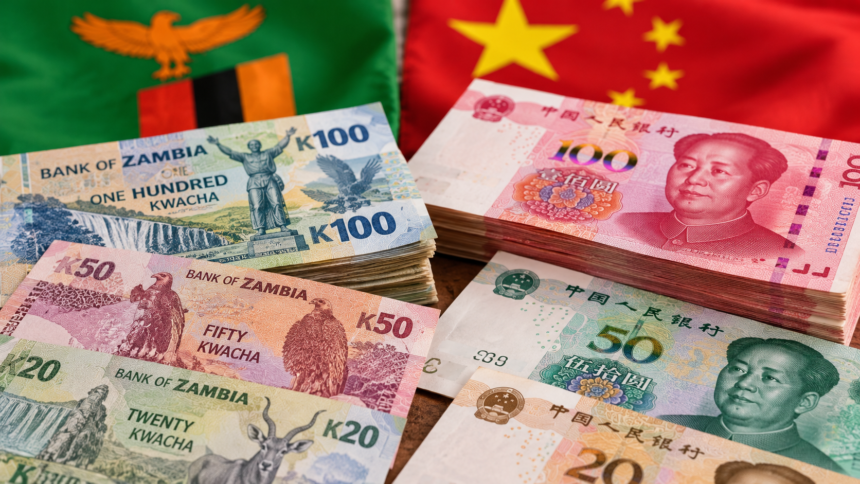
Zambia is preparing to settle part of its copper sales to China in Chinese currency, marking another step in the country’s efforts to deepen financial ties with its largest trading partners and reduce the costs associated with dollar-based transactions.
Bank of Zambia Governor Denny Kalyalya said the arrangement would initially involve Chinese mining companies already operating in Zambia and paying certain taxes in yuan, also known as the renminbi. The plan is expected to begin in 2027, according to reports published on October 14.
The move builds on Zambia’s earlier decision to accept yuan payments for mining taxes and royalties, making it the first African country to formally introduce the Chinese currency for these government revenues.
For Zambia, the decision is largely practical. China is a major buyer of its copper, a metal essential for electricity networks, renewable energy equipment and electric vehicles. Receiving some export payments directly in yuan could reduce currency-conversion costs and help the country manage financial obligations to Chinese creditors.
Kalyalya has also indicated that Zambia is discussing a possible currency-swap arrangement with China and hopes future borrowing could increasingly be denominated in yuan.
The development comes as African governments and banks seek ways to make trade with China cheaper and less exposed to fluctuations in the US dollar.
African countries exploring alternatives to dollar
Several African economies have taken steps towards greater use of the yuan, although their arrangements differ in scope and purpose.
Kenya has explored reducing its exposure to the dollar through its Chinese-financed railway debt. The government announced plans to convert dollar-denominated railway loans into yuan, a move intended to lower debt-servicing costs and reduce pressure on foreign-exchange reserves.
Ethiopia has held discussions with Chinese lenders about converting part of its dollar-denominated debt into yuan. Such a change could help align repayments with its financial relationship with China, although negotiations do not necessarily mean a conversion has been completed.
South Africa has strengthened the infrastructure supporting yuan transactions. Standard Bank, one of the continent’s largest lenders, has connected to China’s Cross-Border Interbank Payment System (CIPS), allowing more direct settlement of transactions involving the Chinese currency.
Nigeria and Egypt have also established currency-swap arrangements with China. These provide mechanisms for facilitating trade and financial transactions in the two countries’ currencies, including the yuan, rather than relying exclusively on the dollar.
These developments do not mean all five countries have abandoned the US currency. In most cases, the objective is to create additional payment options, reduce transaction costs or manage debt more efficiently.
The dollar is not disappearing
Despite the growing interest in the yuan, the US dollar remains the dominant currency in global trade and finance. Switching to another currency also carries risks, including exchange-rate fluctuations and the challenge of obtaining enough yuan when debt repayments fall due.
The attraction among African states is therefore less about abandoning the dollar entirely and more about having alternatives.
Zambia’s copper trade illustrates the logic. When a country exports heavily to China, receives payments in yuan and owes money to Chinese lenders, using the same currency for some transactions can reduce conversion costs and simplify financial management.
The bigger question is whether these arrangements will expand beyond individual commodities, government debt and selected banking transactions.