

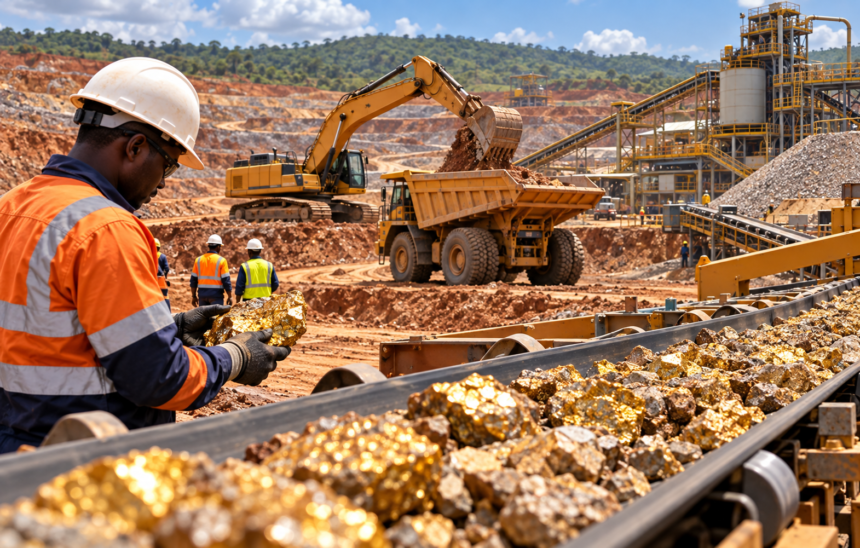
Zambia has launched a domestic gold refinery as the country seeks to retain more value from its mineral resources, strengthen small-scale mining and reduce its heavy dependence on copper exports.
Minera Refineries Zambia Limited unveiled the facility at the Mining and Investment Insaka in Lusaka on October 25, 2026. The company says the refinery can process gold to approximately 99% purity, with its equipment and laboratory capable of achieving levels of up to 99.99%.
The launch comes as African countries increasingly invest in local mineral processing instead of exporting raw or semi-processed resources, in an effort to generate more income, create jobs and strengthen domestic industries.
Copper Still Dominates Zambia’s Exports
Despite its gold potential, Zambia’s mining economy remains heavily reliant on copper. According to the US Geological Survey, copper accounted for 66% of the country’s goods exports in 2024, generating approximately $7.5 billion. Gold contributed just 2%, worth about $262 million.
Official gold production, excluding doré, stood at 3,141.81 kilogrammes in 2024, significantly below the government’s target of 18,000 kilogrammes for 2025.
The new refinery could help Zambia capture more value from locally mined gold, but its success will depend on securing sufficient supplies and attracting miners into formal trading channels.
Andrew Mukupa Katandula, managing director of Minera Refineries Zambia Limited, has outlined a two-year plan to formalise artisanal gold mining, provide targeted advance financing to miners and improve transparency in gold production and trade.
Such measures will help small-scale miners access capital and connect with formal buyers, although competitive prices and prompt payments will be essential to attracting consistent supplies.
Formalising the Gold Trade
Zambia is also seeking to expand regulated participation in gold mining. Mines Minister Paul Kabuswe said the government had issued 1,201 gold-related artisanal mining licences since 2023.
The Bank of Zambia is already an established buyer in the domestic market. By the end of September 2025, it had purchased 3,051.3 kilogrammes of gold valued at $396.3 million, creating competition for locally produced supplies.
Minera says gold sourced from Mpika and processed at its facility achieved high purity levels and attracted interest from potential buyers. The initiative has also been linked to a projected economic opportunity exceeding $1.8 billion, although the available reporting does not specify the timeframe or assumptions behind that estimate.
Zambia’s long-term contribution will depend on actual processing volumes, reliable supplies, market access and the extent to which increased activity translates into higher export earnings and income for local miners.