

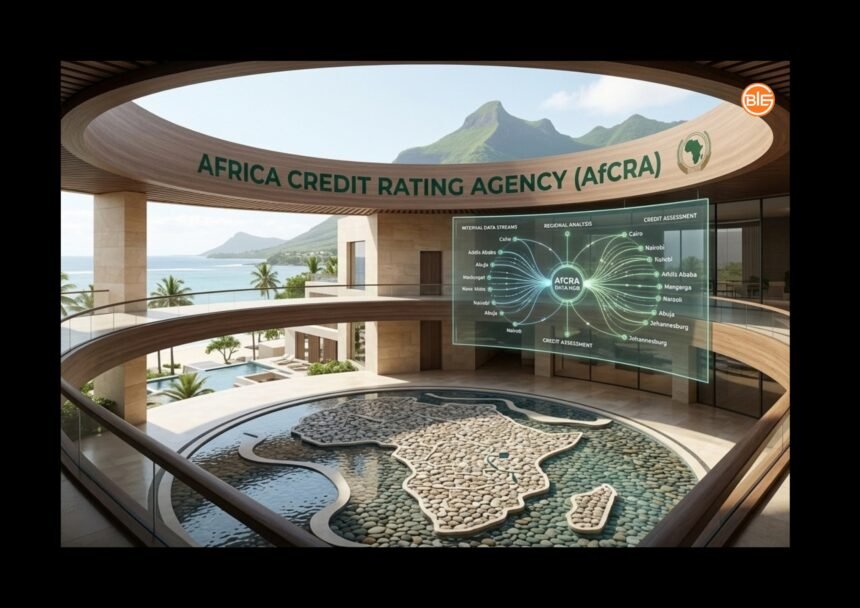
Africa’s new credit rating agency must win over global investors who may prefer ratings that justify a higher yield for the risk rather than a fair yield, according to Ann Rutledge, founding principal of credit ratings firm CreditSpectrum Corp.
Kwame Owino, chief executive of Nairobi-based think tank the Institute of Economic Affairs Kenya, said he does not think a continental agency could enforce debt disclosure by finance ministries or persuade pension fund managers to change their approaches.
The Africa Credit Rating Agency, or AfCRA, was inaugurated on Oct. 7 as a privately owned, self-funded agency under an African Union mandate. Its chief architect, Misheck Mutize, has said its main role will be to steer Africa’s estimated $4 trillion in domestic savings into African assets. Rutledge and Owino responded to written questions from sable.
The investor question
Rutledge, who rated bonds in Asia for Moody’s through the Asian financial crisis, said global investors “are not judges of quality. They are pragmatists. They will use whichever rating agency gives them what they want.”
That is the dilemma for Africa, Rutledge said. A regional player using the finest analytical system in the world “may be viewed as weak and accommodating,” because “we perhaps give global investors too much power in this dialogue.”
“Come hell or high water, investors need to invest,” she said. “The fairer the ratings are, higher or lower, or even the more information investors are exposed to, the better off we all are.”
Even so, she said a regional agency could address two problems. The first is that “there is far too much groupthink in the legacy credit ratings industry today.” The US passed the Credit Rating Agency Reform Act of 2006 to foster more competition, but its passage coincided with the beginning of the financial crisis. “Competition has been stifled,” she said.
The second is that a rating agency’s mandate should be more than commercial profitability. “It is a privilege.”
Her own firm’s systems show that “some Big Three official ratings are inflated, and some are oppressive,” Rutledge said, referring to Moody’s, S&P Global Ratings and Fitch Ratings. “But no one questions our analytical legitimacy, because we don’t tell stories.”
Rutledge, who was involved in the very early development of capitalist market mechanisms in China, said that country “borrowed Western science but not Western money” and had a large diaspora backing it. Any new player will need to build credibility, she said. “It doesn’t come automatically.”
The fiscal question
“I am not persuaded by the view that there is or may be a persistent bias in rating of sovereign debt for African countries,” Owino said.
The African Union and the African Peer Review Mechanism argue that global methodologies overstate African risk. The United Nations Development Programme estimated in 2023 that the gap costs Africa about $74.5 billion a year.
The risk premium for African countries reflects both fiscal management and ratings scores, Owino said, and the two “are not substitutes but are connected (looped).” If the premium is a bit high, “perhaps this may be only so for some countries,” he said. Market perception of foreign exchange risks also affects the risk premium because of the risk of depreciation, he said.
He said he hopes a continental agency will push finance ministries to improve debt disclosure, but does not see any reason why finance ministers and Treasury departments that abhor disclosures, even when these violate their own laws, would yield just because of a continental agency. Lenders such as the International Monetary Fund sometimes tie conditionalities to debt disclosures and are often unsuccessful, he said, citing Kenya as a big violator. “I do not think a continental risk evaluator would manage to enforce that disclosure.”
The savings question
AfCRA’s main aim also runs into national rules, according to Owino. Where regulations limit the exposure pension funds may take, they may need to be reformed to permit investment outside borders, he said. In Kenya, most pension funds are too concentrated in sovereign debt, which he said he thinks is unhealthy.
“I cannot see how a continental rating agency could persuade fund managers to change their approaches,” he said. Domestic sovereign yields are often high enough in nominal terms that fund managers have little commercial incentive to take on foreign exchange risk by investing across borders, even within Africa, he said.
What to watch
As a Mauritius-based agency, AfCRA needs a licence from the island’s Financial Services Commission before it can publish ratings. The African Union has said it plans regional subsidiaries.
Once operating, its next hurdle is credibility, according to Rutledge. If AfCRA produces credible research and ratings, it is making a contribution not just to Africa but to the industry and global markets, she said. For Owino, the hurdle is regulation. How pension regulators treat AfCRA’s ratings will help decide how much of Africa’s $4 trillion in domestic savings the agency can reach.