
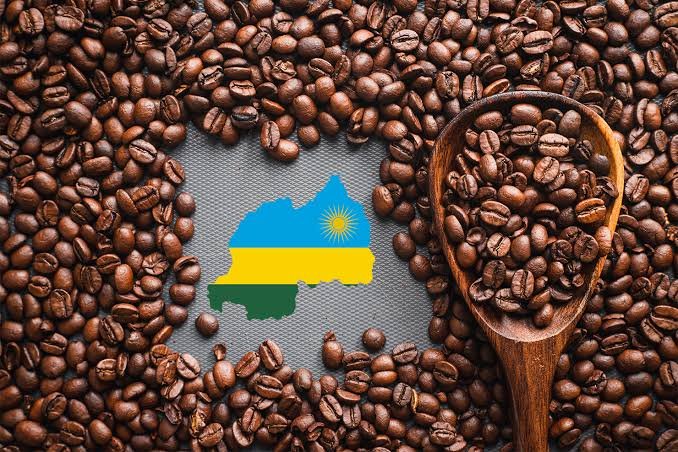
Rwanda’s specialty coffee fetched a record $452 a kilogram at an online auction on Wednesday, the highest price recorded in the programme’s three years. But across Africa’s mainstream coffee trade, commercial auction prices and farmer payments tell a more restrained story. Rwanda’s National Agricultural Export Development Board said the Oct. 21 sale set a record for Rwandan coffee.
Kenya’s opening auction of the season averaged about $5.95 a kilogram, according to the Nairobi Coffee Exchange. Tanzania’s Coffee Board listed clean-arabica auction prices at $7 a kilogram on its Oct. 23 dashboard. Côte d’Ivoire, meanwhile, set its guaranteed coffee farmgate price 23.5% below the previous season’s main-crop price.
These are different prices at different stages of the trade, not a ranking of what each country’s farmers earn. Together, however, they show the distance between coffee sold as a scarce, competition-selected product and coffee moving through ordinary commercial channels.
Africa’s coffee prices at a glance (US$ per kg)
- Rwanda, top auction lot: $452.00. The Best of Rwanda online auction set the record on Oct. 21.
- Kenya, top auction price: $7.64. AA-grade coffee reached the day’s high at the Nairobi exchange’s first sale of the season on Oct. 6.
- Tanzania, clean arabica: $7.00. The Coffee Board’s auction indicator stood here on Oct. 23.
- Kenya, AA average: $6.87. This was the average for top-grade coffee at the Oct. 6 sale.
- Kenya, all-grade average: $5.95. This was the average across every grade at the same sale.
- Uganda, arabica parchment: $4.24–4.38. Farmgate prices in the first half of September, as tracked by the Agriculture Ministry.
- Tanzania, clean robusta: $3.40. The Coffee Board’s auction indicator stood here on Oct. 23.
- Uganda, robusta FAQ: $3.15–3.28. Farmgate prices in the first half of September, as tracked by the Agriculture Ministry.
- Côte d’Ivoire, guaranteed farmgate: $2.23. The government’s price for the 2026/27 main crop.
For reference, the Tanzania Coffee Board’s Oct. 23 dashboard put New York arabica at $6.90 and London robusta at $3.30.
Rwanda’s premium begins with selection
The record followed a competition designed to identify and market Rwanda’s best coffees.
The National Agricultural Export Development Board selected 25 outstanding coffees from 320 samples for the third Best of Rwanda competition. K-Organics, based in Huye District, won the special-process category with an anaerobic natural coffee scoring 90.74 points. Great Coffee Farmers’ Cyeza washing station topped the fully washed category with 89.74 points, according to NAEB.
The selection matters: fewer than 8% of submitted samples received recognition. NAEB later said 31 lots were sold at the auction. These were exceptional coffees, not a representative sample of Rwanda’s exports.
Best of Rwanda in numbers
- 320 samples submitted from across the country.
- 25 coffees named winners on Aug. 27.
- 31 lots sold at the Oct. 21 online auction.
- 90.74 points for the winning K-Organics anaerobic natural.
- $71.80, $88, $452: the winning price per kilogram in 2024, 2025 and 2026.
- 66 times: NAEB’s measure of the 2026 top price against the average international price of Rwandan coffee.
The programme’s highest prices have risen sharply. NAEB puts the winning price at $71.80 a kilogram in 2024 and $88 in 2025. This year’s $452 peak was more than five times the previous winning price.
Producers’ accounts point to the work behind those premiums. K-Organics owner Evariste Karangwa emphasised picking ripe cherries, processing promptly and controlling drying. Cyeza’s Esther Uwimana described working with farmers on crop management and timely delivery.
Kenya shows why averages need unpacking
Kenya’s first sale of the 2026/27 season, held on Oct. 6, recorded an average of $297.38 per 50kg, or about $5.95 a kilogram, according to the Nairobi Coffee Exchange. The highest price was $382 per 50kg $7.64 a kilogram for AA-grade coffee.
Rwanda’s record was about 76 times Kenya’s opening-sale average. That measures the gulf between one exceptional specialty lot and a commercial auction average not a corresponding difference in farmers’ incomes.
Kenya’s grade mix also shaped the result. AA coffee averaged $343.37 per 50kg and AB averaged $333.60; together, those grades represented about 54% of the weight sold. Lower-priced grades pulled down the overall average.
Certified coffee averaged $312 per 50kg against $290 for uncertified lots, an apparent premium of about 8%. But analysis by Kenya’s business press attributed much of that difference to certified coffee’s greater concentration in higher grades. Certification alone did not explain the gap.
Robusta faces a different market
Tanzania’s Coffee Board dashboard, dated Oct. 23, listed average clean-coffee auction prices of $7 a kilogram for arabica and $3.40 for robusta. The board did not identify the averaging period and notes that the prices include other business transactions, so these are published market indicators rather than verified October-wide averages.
Uganda’s figures show similar pressure on robusta. Agriculture Ministry monitoring, set out by Agriculture Minister Frank Tumwebaze, put processed robusta, known as Fair Average Quality, at about $3.15–3.28 a kilogram (USh11,500–12,000) in the first half of September, against $3.69–3.83 (USh13,500–14,000) a year earlier. Parchment arabica moved in the opposite direction, rising to $4.24–4.38 (USh15,500–16,000) from $3.83–4.10 (USh14,000–15,000).
In Côte d’Ivoire, the guaranteed coffee farmgate price fell to about $2.23 (CFA1,300) a kilogram for the 2026/27 main crop from about $2.92 (CFA1,700) announced for the 2025/26 main crop, a reduction of about $0.69 (CFA400), or 23.5%, according to government announcements. One regional news agency reports the price had been cut to CFA1,200 in March; the official March announcement covered only cocoa. That establishes a substantial cut from the last main-crop price, not proof that Ivorian growers receive Africa’s lowest prices.
Beyond the record bid
Rwanda’s ambitions extend beyond showcase lots. At the competition’s awards ceremony, Agriculture Minister Telesphore Ndabamenye said the country intended to double its average coffee export price, although NAEB’s account specified neither a deadline nor a starting price.
Outside the auction, a kilogram of Rwandan coffee sells for about Rwf10,000, NAEB Chief Executive Claude Bizimana said after the sale. The country’s coffee exports earned $139.3 million from 23,000 tonnes in the last fiscal year, roughly $6 a kilogram, according to NAEB data.